Abbott Libre Sense Glucose Sport Biosensor in review
You’ve passed the 100 km mark of the race, your heart rate is steady, the Wahoo says you’re pedalling well and then, out of nowhere, you hit it – the dreaded bonk! You’ve got nothing left to pedal with. The Abbott Libre Sense Glucose Sport Biosensor wants to avoid these moments with real-time measurement of your blood sugar. We explain how it works.
Data collection during rides has become ever more comprehensive over the last few years, encompassing almost everything. Alongside basic route and speed recording on Strava and its competitors, for ambitious riders, heart rate and power have become almost indispensable while training. However, when it comes to planning food and fueling, you’re usually faced with a black box and have to rely on your subjective feeling rather than quantitative data.
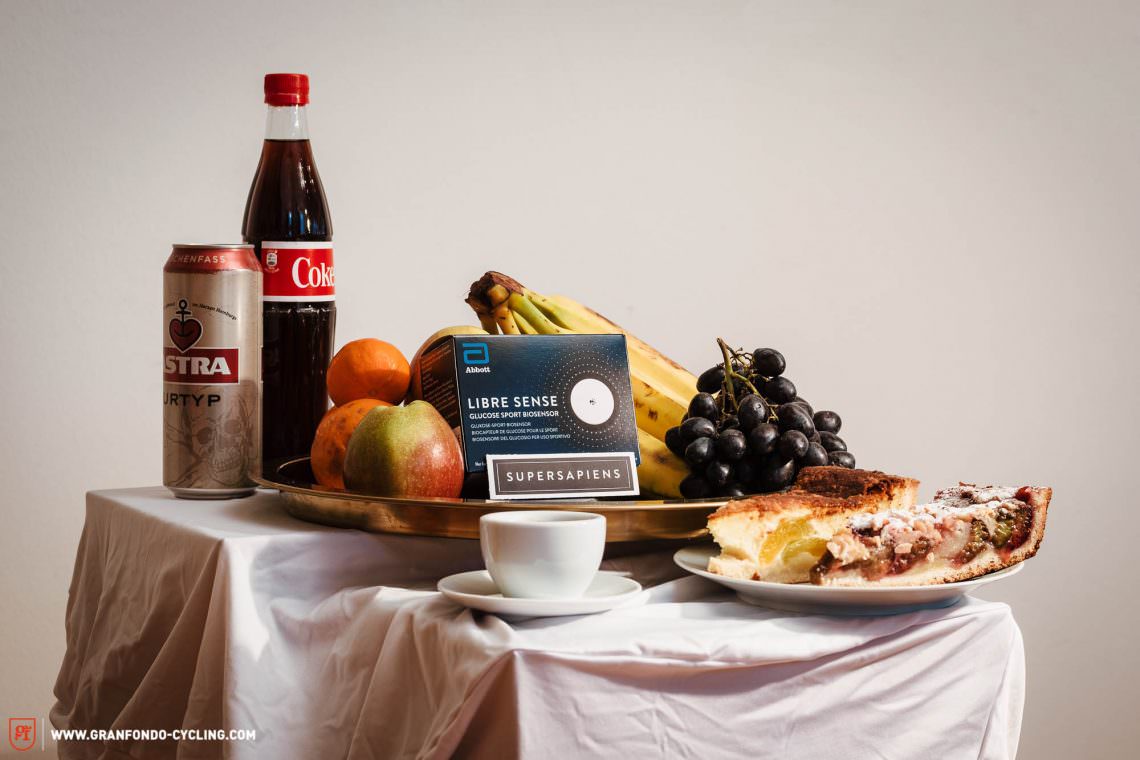
Thanks to Abbott’s Libre Sense Glucose Sport Biosensor, for the first time, athletes gain access to real-time data on their blood sugar, eliminating part of the puzzle. For € 130, Abbott offer a trial pack consisting of two sensors, for a total of 28 days of continuous monitoring. For longer-term use, the subscription model, which can be cancelled at any time, provides you with two sensors every 28 days for € 129.
The Abbott Libre Sense Glucose Sport Biosensor in detail
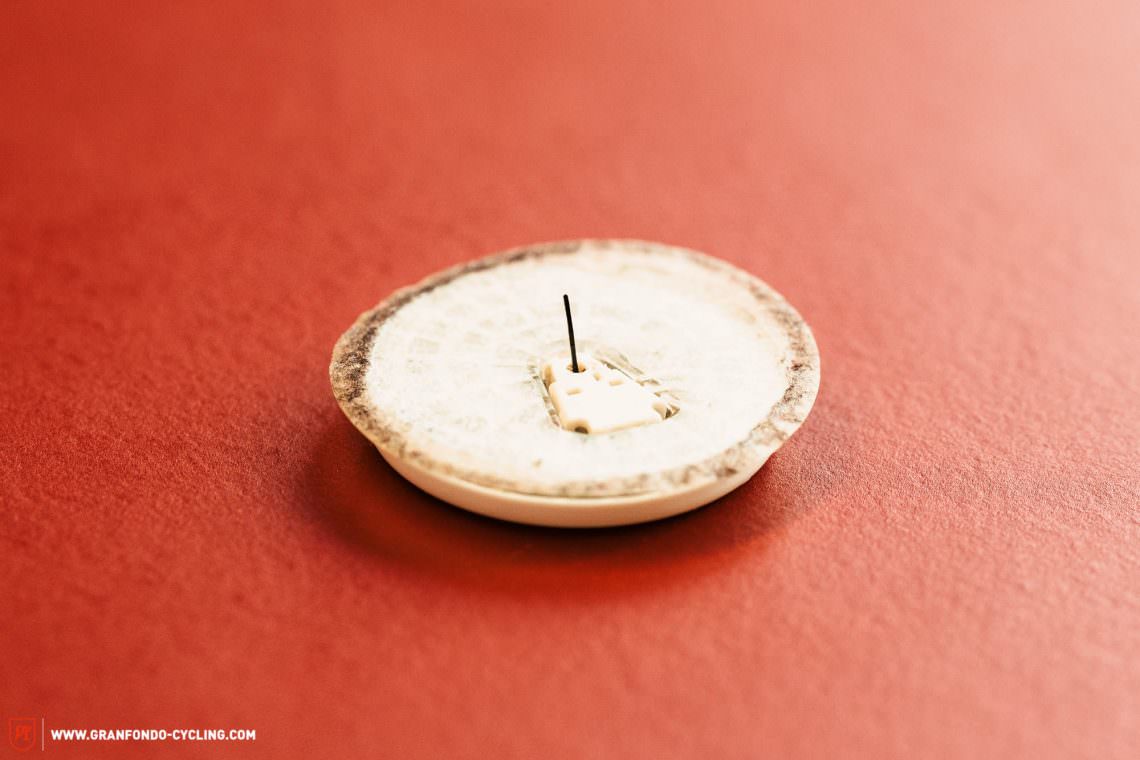
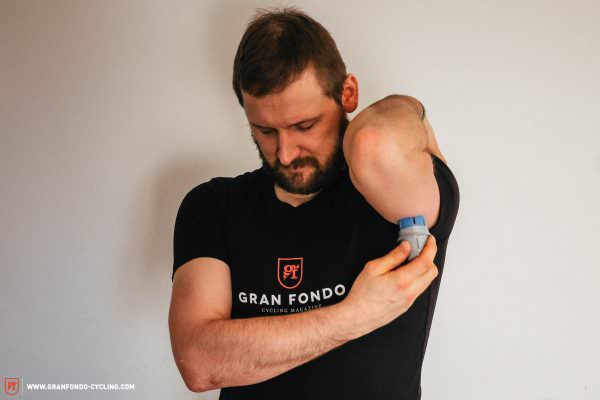
The sensor is about the size of a two-euro coin and affixes to the back of your upper arm via an adhesive patch for two weeks, where it isn’t unduly disturbing. It has a soft synthetic filament that penetrates approximately 5 mm under the skin. To apply it, you have to insert the sensor with the help of an applicator. The process is painless and can be done by anyone themselves. The sensor is waterproof, letting you shower with it and, according to Abbott, even swim. It is activated via NFC and sends the measured blood sugar level, in a 55–200 mg/dl range, to your smartphone via Bluetooth. If your smartphone isn’t within range i.e. more than 10 m outdoors, the sensor stores the last 8 hours of data internally and transmits it when reconnected.
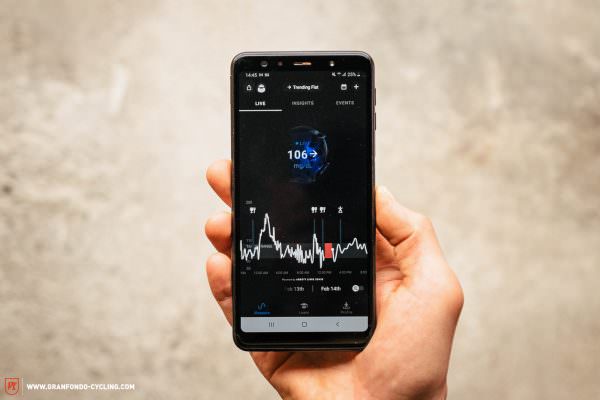
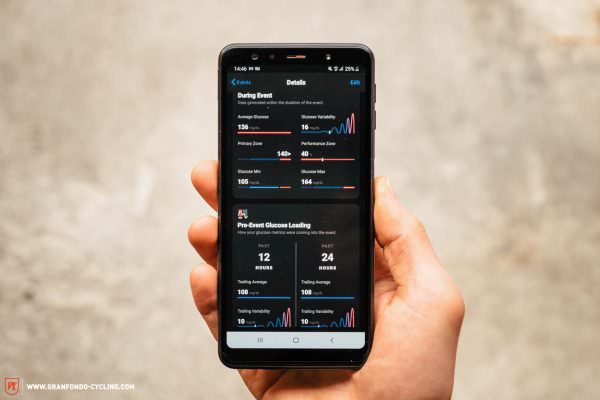
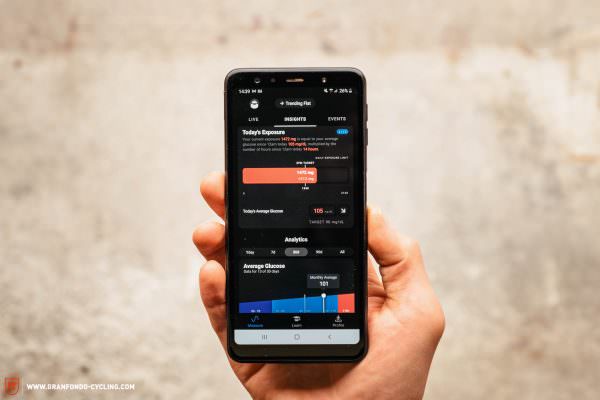
On your smartphone, the tidy and user-friendly Supersapiens app displays your data. Alongside the real-time display of your blood sugar, the current trend (rising, falling, constant) and history are also displayed. After a carbohydrate-heavy meal, you can watch as your blood sugar rises. The app displays whether you’re in a predefined range and how far away you are from your average daily target. The app is also suited as a training tool to optimise your nutrition and eating habits during sport, letting you enter workouts, meal times and sleeping phases. That done, you’ll get a detailed blood sugar history for before and during your event.
Good to know: glucose metabolism
Glucose metabolism follows some general rules but happens at different speeds for different foods and different people. Even if you haven’t eaten anything beforehand, blood sugar levels can rise during exercise as the body releases stored glucose in reaction to exercise. Depending on the intensity and duration of your workout, a value between 110 and 140 mg/dl is ideal. If you don’t take on more fuel during a long ride, your blood sugar will continue to fall. At a value of 75 mg/dl you can still be feeling good but strap yourself in – you’re just before hitting the wall, otherwise known as the dreaded bonk.
The Abbott Libre Sense Glucose Sport Biosensor on test
After two weeks of testing, we can only confirm what we had already assumed: after eating, the curve goes up, during long workouts it goes down again and you should be sure to continue fuelling along the way. However, it’s impossible to determine whether rice or spaghetti are better for carb-loading after such a short amount of time testing. While power meters and heart rate monitors provide immediate feedback to their users, the Abbott sensor requires more analysis. You’ll need to figure out yourself which meals are better before which event. The app provides lots of data and the ability to make comparisons but doesn’t provide any recommendations. The live tracking can be helpful on the road to prevent bonking, though there’s no alarm to warn you about low blood sugar and remind you to eat. As such, the sensor is better suited to athletes who adhere to a rigorous, sports science-based nutrition plan, complete a detailed diary, follow their training plan diligently and are trying to break through a performance plateau.
The Abbott Libre Sense Glucose Sport Biosensor ventures into terrain that hasn’t been explored before. Measuring blood sugar levels in real-time is an innovative approach – however, it only provides limited assistance in simplifying the complexity of optimal fuelling. In order for the sensor to be truly useful and not just a gimmick for data nerds, you’ll have to spend a lot of time examining your own nutrition and have to turn yourself into a test subject to get meaningful insights.
Tester: Rudolf
Duration: 14 days
Manufacturer’s website: abbott.com
Did you enjoy this article? If so, we would be stoked if you decide to support us with a monthly contribution. By becoming a supporter of GRAN FONDO, you will help secure a sustainable future for high-quality cycling journalism. Click here to learn more.
Words: Rudolf Fischer Photos: Benjamin Topf, Tobias Hörsch, Rob Wormer, Valentin Rühl